.webp)
Sign Up / Sign In
.png)
Profile
Exclusives


Account
New rules introduced to NBL
Share


New FIBA rules covering fouls, ejections and expanded instant replay will reshape how games are officiated.
By
NBL.com.au
The fast-approaching Hungry Jack's NBL27 Season will be exciting for a number of reasons, from the revamped rosters to new stars lining up for the 10 teams.
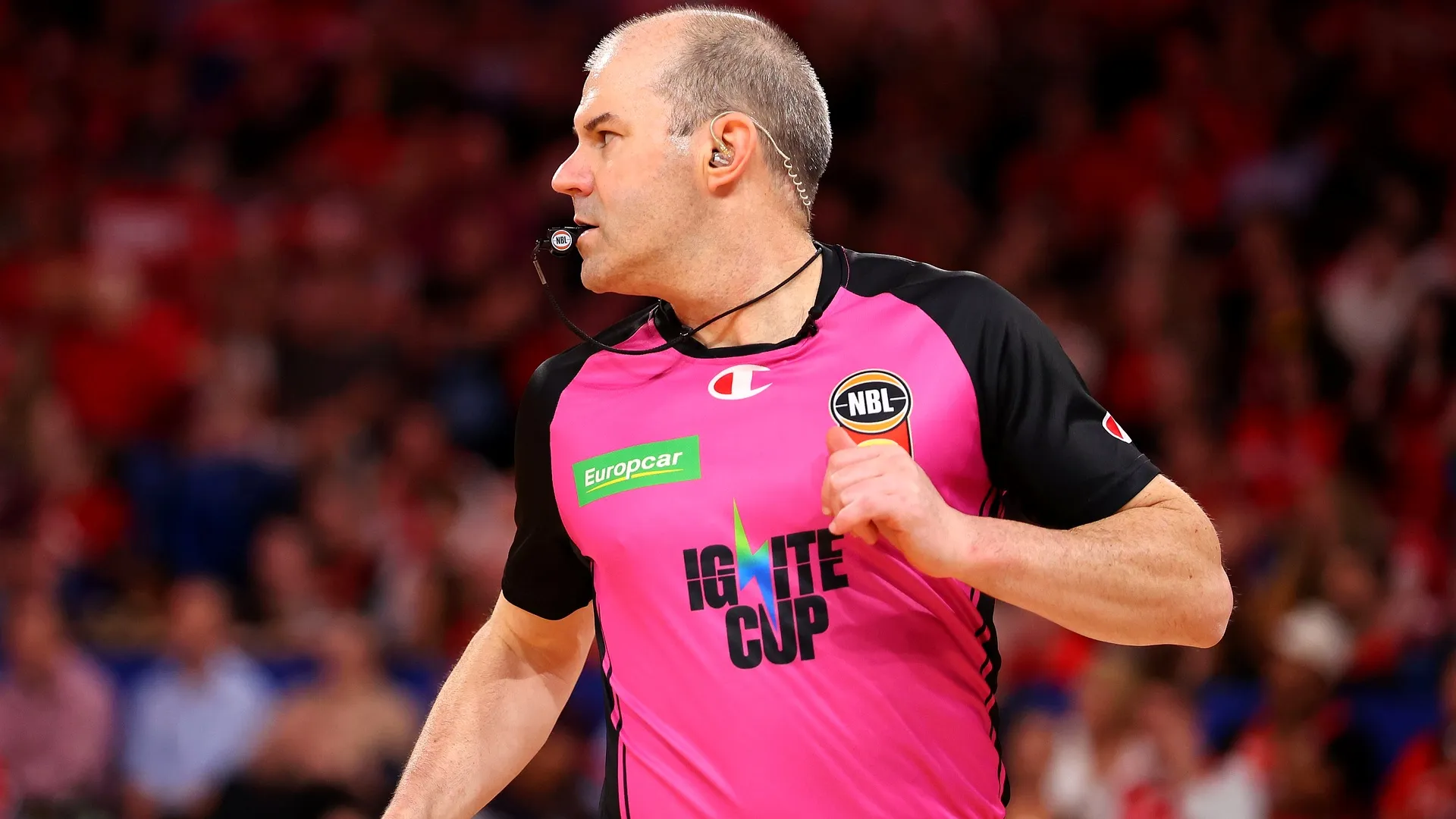
Another is the new FIBA rules, which will be implemented during the 2026-27 campaign (starting at the CODE Sports NBL Blitz), which centre around how the League will be officiated.
The first key FIBA rule change is that unsportsmanlike fouls will now be replaced and split into classifications of 'disruptive' and 'flagrant' fouls.
A disruptive foul will cover less severe offences, such as deliberately stopping a transition without making a legitimate play on the ball, while a flagrant foul will be reserved for more serious, reckless, dangerous or excessive contact.
Disruptive fouls will not count towards an automatic ejection, while flagrant fouls will.
The second is that technical fouls will be split into either Category 1 or 2 based on the severity of the offence.
Category 1, which will count towards an ejection, will cover more serious behaviour, including disrespect towards officials, taunting, offensive language or gestures and foul simulation.
Category 2, which will not count towards an automatic disqualification, covers less serious or administrative offences, such as delaying the game.
Read more >> NBA teams set sights on Blitz, Next Star
Speaking of ejections, players will now be automatically disqualified after receiving two Category 1 technical fouls, two flagrant fouls, or one Category 1 technical and one flagrant foul.
Disruptive fouls and Category 2 technical fouls will not count towards an automatic ejection.
Next is the tightening of shooting foul interpretations, as FIBA has updated its definition of when a player is considered to be in the act of shooting.
FIBA specifically cited the increasing number of players attempting to manipulate situations to draw shooting fouls.
On jump shots, a player's shooting motion will begin when they start moving their shoulders and the ball upwards towards the basket, while on drives it begins once the ball has been gathered and the player continues their shooting motion towards the basket.
Passing the ball after contact, or moving it upwards away from the basket in certain situations, will mean the player is no longer considered to be in the act of shooting.
Finally, more situations can now be reviewed, with the instant replay system being expanded.
This will give officials more opportunities to review potentially game-changing decisions.
In the final two minutes of the fourth quarter and overtime, NBL officials will be able to review whether the ball had left a passer's hands when a defensive foul occurred during a throw-in.
Officials will also be able to review whether a goaltending or basket interference violation occurred after a foul at any stage of the game, with the new provisions also applying to a Head Coach's Challenge.
