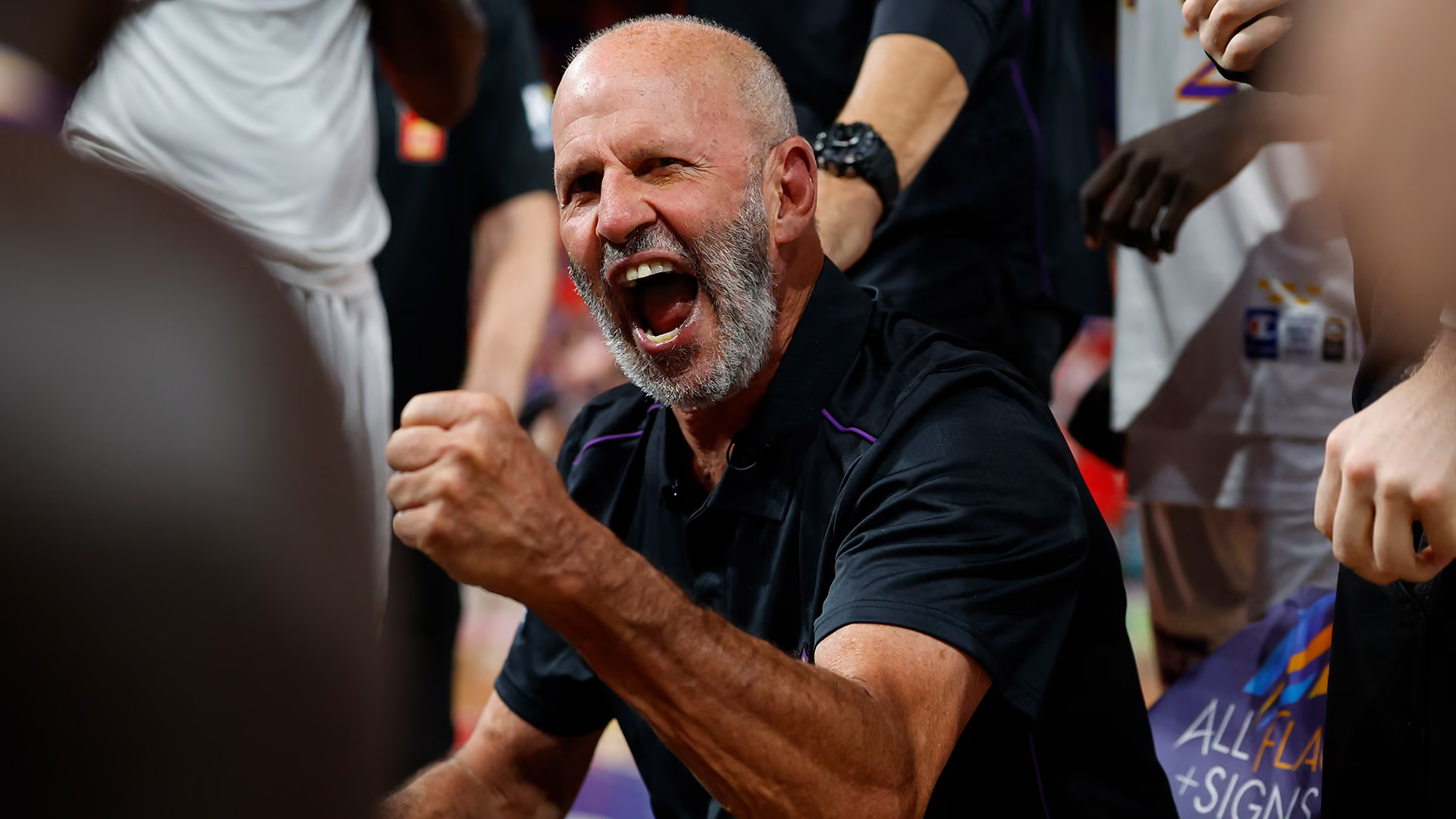
.webp)
Sign Up / Sign In
.png)
Profile
Exclusives


Account
The GOAT standard: How Goorjian keeps winning

Share


Brian Goorjian first coached in the NBL in 1998. Since then, his adaptability has helped him win six championships.
By
NBL.com.au
Everywhere he’s coached, he’s been successful, and that’s why Brian Goorjian is known as the GOAT (greatest of all time) in terms of basketball coaching in Australia.
While his connection to his players has always been there, the longevity of Goorjian can be credited to the fact that the Californian-born mentor is adaptable in the way he coaches and approaches the game.
His time in Australia first started as a player with the Melbourne Tigers from 1977 to 1985, where he captained and learnt from the great Lindsay Gaze.
Once he hung up his playing boots, Goorjian transitioned into coaching and followed in the footsteps of his mentor Gaze, saying, “he’s definitely a family figure. I love that man. I care for that man.”
His first head coaching gig came in 1986 with the Ballarat Miners, guiding them to the SEABL South Conference championship in just his second season.
The impressiveness of this tenure landed Goorjian his first NBL gig in 1988 with the Eastside Spectres.
>> Finals schedule, tickets & how to watch
The Spectres had recorded an eighth and ninth-placed finish in the seasons prior to Goorjian’s arrival, and although he failed to qualify for Finals in his first two seasons in charge, he led the side to second-placed finishes in 1990 and 1991 and suffered a Championship Series defeat to the Wildcats in his final season at the club.
The catalyst for that improvement was the Spectres' defence, which was rated in the top four in both the 1990 and 1991 seasons.
The Spectres’ merger with Southern Melbourne saw Goorjian remain in the Victorian capital with the newly-formed South East Melbourne Magic, which he was in charge of for the club’s entire NBL run.
The Magic’s existence started with a bang as Goorjian led them to the 1992 NBL title with a roster that featured the likes of Bruce Bolden, Tony Ronaldson, Robert Rose, Andrej Lemanis and Andrew Parkinson.
That successful season, where the Spectres held a league-best 99.3 defensive rating (6.3 ahead of second-placed Adelaide) and net rating (+9.6), also saw Goorjian win his first NBL Coach of the Year title.
As you can see, hard-nosed defence was a main characteristic of Goorjian’s sides early on.
The Magic failed to make another Championship Series until their second title in 1996; however, Goorjian led the side to Finals appearances in each of those trophyless seasons, behind a top-two defence in each campaign.
After that 1996 title, Goorjian led his team to deciders to Adelaide (1997) and Melbourne (1998), finishing runners-up.
Despite another merger (this time between the Magic and North Melbourne Giants) and a name change to the Victorian Giants, Goorjian’s philosophy didn’t change.
Four straight top-two defensive efforts, which led the Titans to Championship Series appearances in 1999 and 2000, followed, before Goorjian headed north and started his first tenure with the Sydney Kings.

As he moved to the Harbour City, that Championship Series turned, as Goorjian turned the eighth-placed Kings into champions in his first season.
And yep, you guessed it, defence was their calling card, going from the ninth-best to league-leaders in 12 months.
But with the firepower that Goorjian had on that team, including Chris Williams, Matt Nielsen and Shane Heal, the Kings also led the competition in offence, highlighting the master mentor’s ability to adapt.
Two more titles, sparked by elite offence and defence, followed, as Goorjian completed his first-ever three-peat.
If not for a Chris Anstey-led Melbourne Tigers in 2006, the Kings would have won four straight (losing Game 3 of the Championship Series by just five points).
Another Championship Series appearance followed in 2007-08 (losing once again to Melbourne, this time in five games), before Goorjian returned to Victoria to coach the South Dragons, after the Kings collapsed.
Upon his arrival, he took over a side that had won just five of 30 games and finished last on the ladder, to a 22-8 record and a title in 2009 (defeating Melbourne 3-2).
Led by Mark Worthington and Joe Ingles, the Dragons had the best defence (101.6) and third-best offence (112), for the best net rating in the league (+10.4) that season.
That Dragons team still remains the only team in NBL history to have won a title in a season immediately after finishing bottom of the ladder.
Following the demise of the Dragons after that 2009 title win, Goorjian took his talents to Asia and spent time as head coach of Chinese side Dongguan Leopards and assistant coach of the Guangdong Southern Tigers and Xinjiang Flying Tigers.
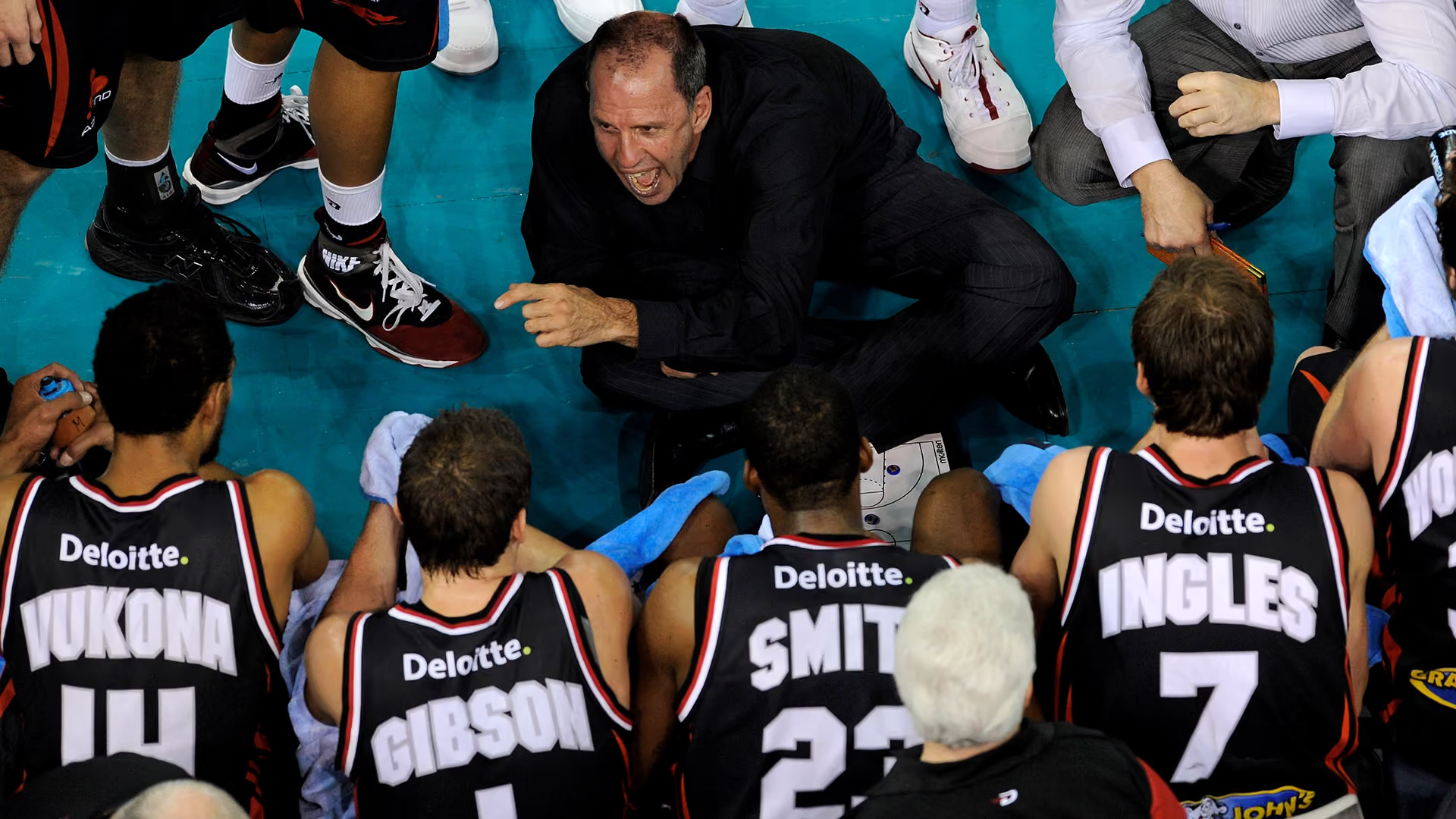
But after more than a decade abroad, Goorjian returned to the NBL and took charge of the Illawarra Hawks for two seasons.
Illawarra hadn’t made the post-season since their Championship Series defeat to Perth under Rob Beveridge in 2017, and had recorded a bottom-placed finish the season prior to Goorjian taking over.
The Hawks managed a third-place finish in NBL21 in Goorjian’s first season in charge, before they finished second in NBL22 with a 19-9 record, making it to the Finals.
Another stint overseas, with the Hong Kong Bay Area Dragons, as well as coaching the Australian Boomers, ensued, before the six-time NBL champion decided to ‘return home’ to the Kings.
Before his second stint in the Harbour City, Goorjian opened up about the importance of adaptability as a coach.
“[One of the biggest things in coaching is] do you have feel?” Goorjian said on the Scoreboard Podcast, ahead of his second tenure with the Kings.
“Is every guy different? Hell yes. Do I teach everybody the same? No.
“Certain guys are taught in certain manners, and certain guys need a hard [push in the right direction].
“Certain guys, you need to back off and hit them with four positives. Certain guys, you've got to give breaks to.
“But there is definitely something that I evaluate and talk about, and it's the same with the coaches. Are they getting better? Are they growing? Are they getting nurtured? Are they getting opportunities? It's a big part of this [personal development].”
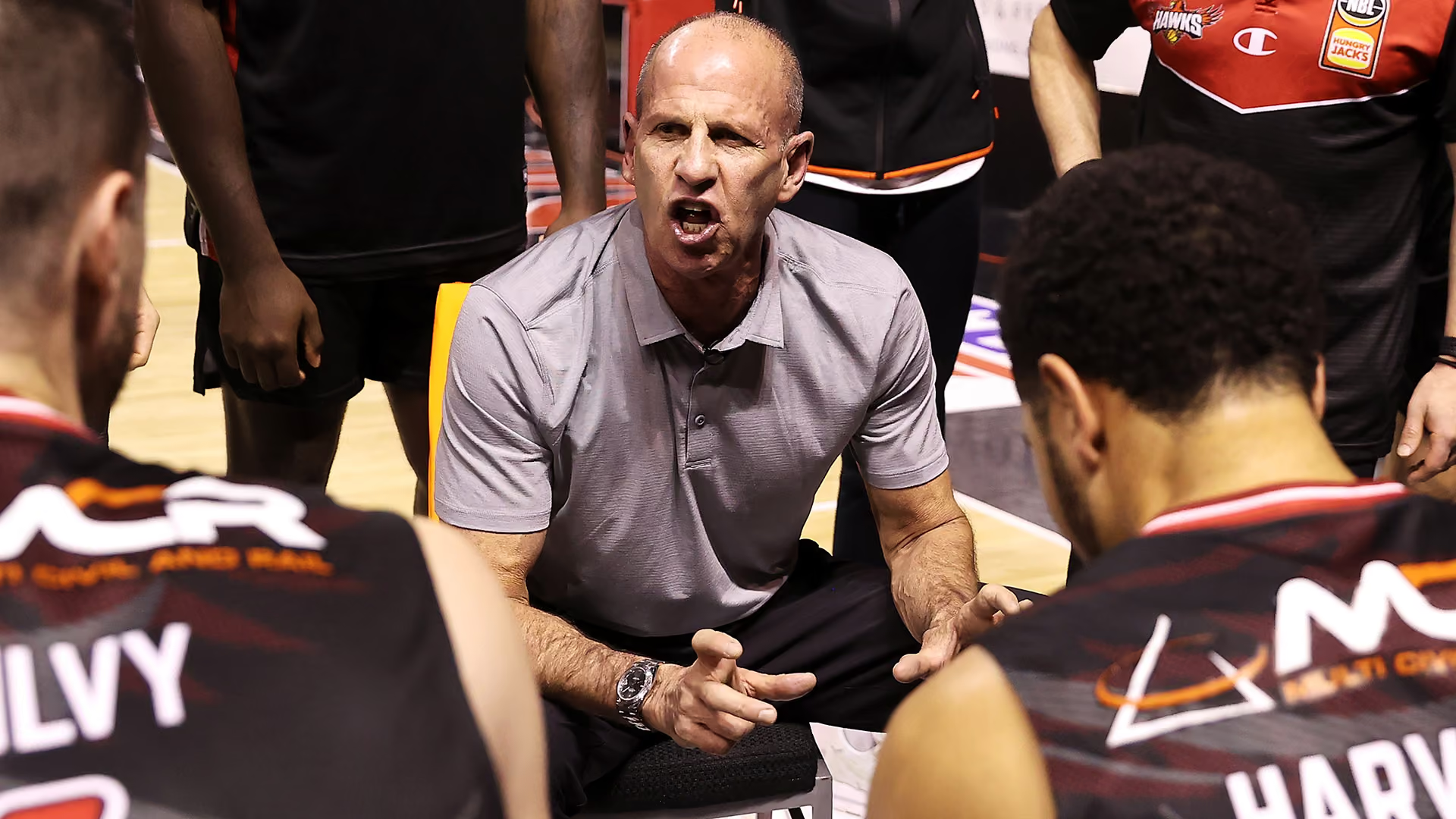
Now in his second season back with the Kings, Goorjian has steered the club to the regular season championship, after having the top offence (123.2) and defence (108.2) in the competition.
Not only that, Goorjian, who has 868 games to his name (winning 68.5 per cent of those matches, is just three wins away from a seventh title with a playing group that he “loves”.
"I would love to see the first team that he [Goorjian] coached, and their style of play back then, compared to now, with the three-point game and pace of play," Xavier Cooks told ESPN.
"That's what great coaches do. They're dynamic, they move with the times, and see what's in front of them.
“It's what Goorj does really well; we have a lot of athletic guys that like to get downhill, and he figured out a game style that moulds around them.
“It's what great coaches do. Whatever they get served in front of them, they put together a strategy that everyone can thrive in."
Upon reflecting on the journey, ahead of Game 1 of the Championship Series against Adelaide, Goorjian acknowledges how much he continues to grow each and every day.
“[I know there have been changes and challenges [along my journey],” he said during the club’s media availability this week.
“From coming to Australia and starting here, before the League went through what it went through, then moving to China, being involved in their national team, going to the Philippines, going to Japan, their national program, coming back to the Hawks, being the Boomers coach, being away for the two Olympics and coming back and doing it all again in Sydney.
“I've constantly been in learning environments, constantly changing, been uncomfortable and been under pressure, while enjoying it.
“I just you know, [one day] you wake up, and you say ‘man, it's not for me anymore’, but I haven’t felt that at all.
“I've asked that question myself, but what you experience every day energises you and makes you want to keep coming back.
“I'm not Boy Wonder or anything, but there's been a definite mindset to being able to move and stay on my toes and not be dragging in fairness to them.
“Especially with what went on last year, I want to make sure I leave this [club] in a good place [when I decide to step away].”
The highly anticipated NBL26 Championships Series, between Sydney and Adelaide, tips off at Qudos Bank Arena on Saturday at 7pm AEDT, live on ESPN and 10 Drama.
>> Read more: Fit for a King: The rise, fall and return of Sydney